I loved robots when I was a kid. They seemed to be everywhere in popular culture. From the Amazing Magical Robot Game, an educational toy that appeared in my Christmas stocking, to the weekly dose of “Danger, Will Robinson” while watching the cult American classic series Lost in Space, I was hooked. So when I was seven or eight years old and "Tricky’s" the local toy shop, put one in their shop window, I had to have it. Beyond the reach of my pocket money, I devised “The Robot Club” with school friends John London and Ian Collie, whose club subscriptions coincidentally covered the price of the robot, though I don’t recall John and Ian getting much time to play with it. (Sorry guys!)
Fast forward fifty-five years and the robots are here for real. However, the reality lacks the magic conjured by my childhood imagination. In fact, to me, the whole robot business seems just a little bit scary.
For starters, why aren’t there any purple robots? Or blue, pink, green, etc.? Even robots in black-and-white movies, like Gort in The Day the Earth Stood Still, were clearly not monochrome. I don’t know what colour Gort was, but he had a metallic shimmer that suggested silver or grey, as did Robot Maria in Fritz Lang’s Metropolis.
Today, though, I bet you a Buffalo nickel that all the humanoid robots you’ve ever seen have been white, or worse, white with black faces. I don’t think this is an accident. I think the way in which robots are presented to us is a representation of the intention of the people behind them. The robots of yore were the product of the creative minds of science fiction writers, who cast robots as angels or demons as their narratives demanded. The folk behind the robots being sold to us today are the products of billionaire tech futurists. Their intended narrative appears to be somewhat different.
In the old stories, the robot was always a character. It could be comic or tragic, loyal or murderous, but it was always a someone. Even when it was a menace, it had personality. It had colour. It had a face you could read, even if it was only a blank mask of rivets. The robots coming to an online distribution outlet via your billionaire-controlled tech device of choice are blank, faceless soldiers of servitude.
These are not characters; they’re appliances with limbs. That they’re white is no accident. White is a cultural signal: clean, clinical, neutral, safe. White is the colour of hospitals and laboratories and the myth of objectivity. A white humanoid says: don’t worry, there’s no ideology here. This is just engineering.
There is more going on here, and I’m not the only one who thinks so. In a recent interview, Subhadra Das, historian of science and author of Uncivilized: Ten Lies That Made the West, revealed a hidden dark agenda. Speaking to Myriam François on The Tea YouTube channel, she outlined some of the motives behind the forthcoming robot revolution.
She says that it’s a myth that science and technology are automatically neutral, “truth with a capital T,” floating above politics. As was the case with eugenics, this aura of neutrality has historically been used to give harmful social ideas a clean bill of health, because if something is labelled “science”, it becomes harder to argue with and easier to obey.
That matters, because the robot revolution is going to force society to answer a very old, very ugly question: what is a person for?
When machines can do more and more of what people currently do for wages, there will be more and more humans who are “unnecessary” to the labour market. In a sane world, that would be the start of leisure. In a less sane world, it becomes the start of sorting.
She talks about how eugenic thinking worked, not as cartoon villainy but as something disturbingly mainstream: decide that society has a “problem”, identify a group you can blame for it, then present control over that group as rational, scientific, and even compassionate. What gave me a chill was the way she described how this thinking can return in softer packaging: not “inferior race”, but “burden”, “low productivity”, “won’t contribute”, “won’t pay taxes”. Those aren’t just insults. They’re the vocabulary of a future in which citizenship is conditional on usefulness.
If that sounds dramatic, consider the mood music coming from the billionaire futurists themselves. The same people who sell “abundance” also flirt with demographic panic: talk of “Western civilisation” in peril, fear of replacement, the sense that the wrong people are multiplying. My earlier point about robot colour isn’t separate from that. If you’re anxious about who counts as the rightful inheritors of the future, then a white, “neutral”, “default” robot starts to look less like a product and more like a flag.
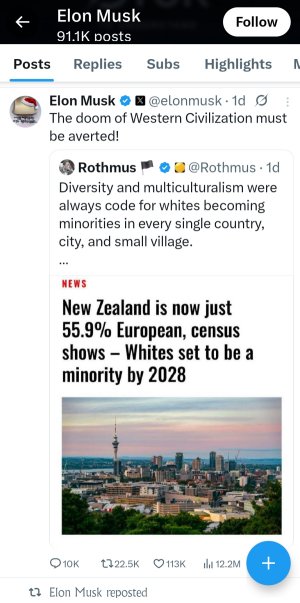
There’s another strand in her reasoning that helps explain why this ideology arrives with such confidence: the belief that the future is inevitable. In the transhumanist/AI-accelerationist framing she describes, AI isn’t treated as one possible path. It’s treated as destiny, almost a secular end-times story: history has a direction, the merger with machines is coming, and anyone who slows it down is cast as ignorant or even immoral.
Once you accept that framing, debate becomes blasphemy. Regulation becomes “standing in the way of progress”. And political questions, like “who owns the robots?” or “what happens to the displaced?” get pushed aside by a louder question: “how fast can we build?”
Which brings us back to those white bodies and black faceplates.
I’m not saying a designer sat down and said: “Make it look colonial.” I’m saying something more mundane and therefore more plausible: the industry is building the visual language of a future in which robots are framed as neutral, rightful, unquestionable. The whiteness is laundered as safety. The black “face” is blankness: no ethnicity, no history, no individuality, nothing that might prompt you to empathise or to ask who is being served. A humanoid, stripped of the human.
In the fiction of my childhood, robots were angels or demons depending on what the story needed. In the marketing of today, robots are neither angel nor demon. They are presented as inevitable infrastructure. And when infrastructure is inevitable, the people who control it quietly become inevitable too.
So the question I want to ask, before the robot revolution is declared “AMAZING” and the press releases start writing the future in permanent ink, is this:
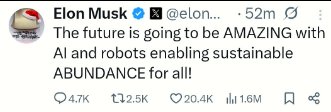
When the billionaire futurists say “abundance for all”… who exactly is included in “all”? My fear is that it will be “all who remain” after the dust has settled on what may turn out to be the most turbulent period in human history.